Living with Google Drive for years was like renting a spotless Airbnb—the kind where you half-expect to find a chocolate on your pillow and zero evidence of human life.
Everything worked. I never saw the landlord. I had no idea what lurked behind the walls. The metaphorical water kept running, the lights stayed on, and my files lived somewhere between a crisp interface and a logo that said, “Don’t worry, we’ve got this.”
I didn’t know where the pipes were. I didn’t know how anything worked. Rent (well, subscription) paid, problem solved.
Nothing was technically wrong with my digital Airbnb. Which made the idea of moving out feel slightly dramatic—like storming out of a five-star hotel because the Wi-Fi ghost sneezed.
But eventually, I had a realization: I couldn’t even point to where my digital furniture was. Sure, I “owned” the files—on paper. But did I have the keys to the building? Not really. If Google ever changed the locks, I’d be standing outside in my pajamas, clutching a USB stick like it’s a talisman against corporate eviction.
So I did what any rational person with a mild tech obsession and a questionable sense of adventure would do.
I bought an absurdly tiny house. (By which I mean: a computer that makes a hamster cage look spacious.)
A house with zero plumbing. If I wanted running water, I’d have to install it myself—possibly with duct tape and wishful thinking.
Shopping for a Home That Wouldn’t Make the Neighbours Call the Cops
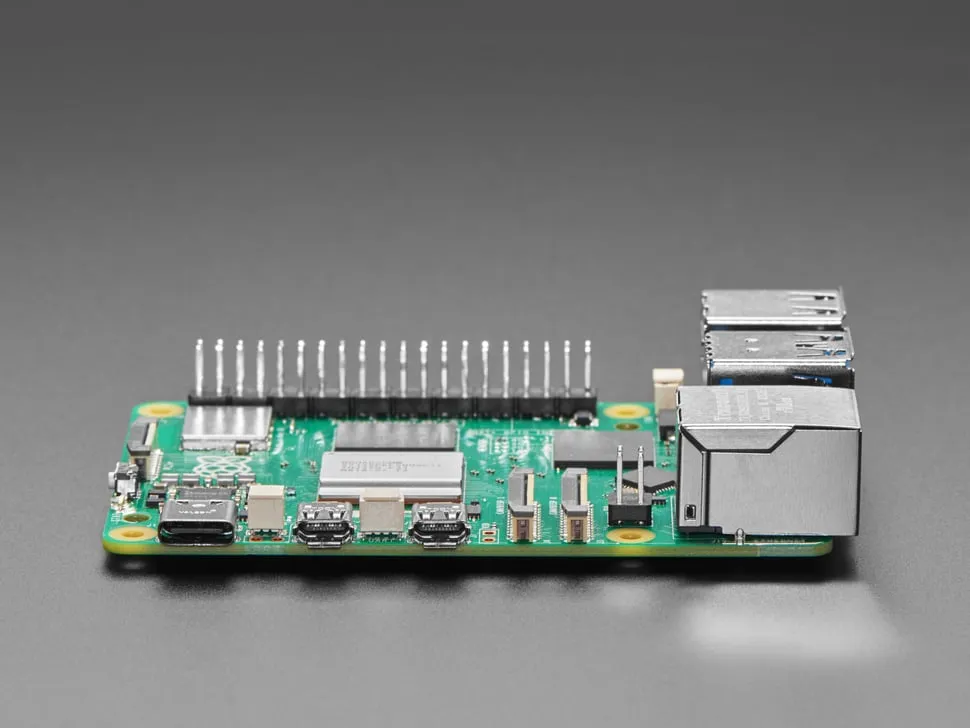
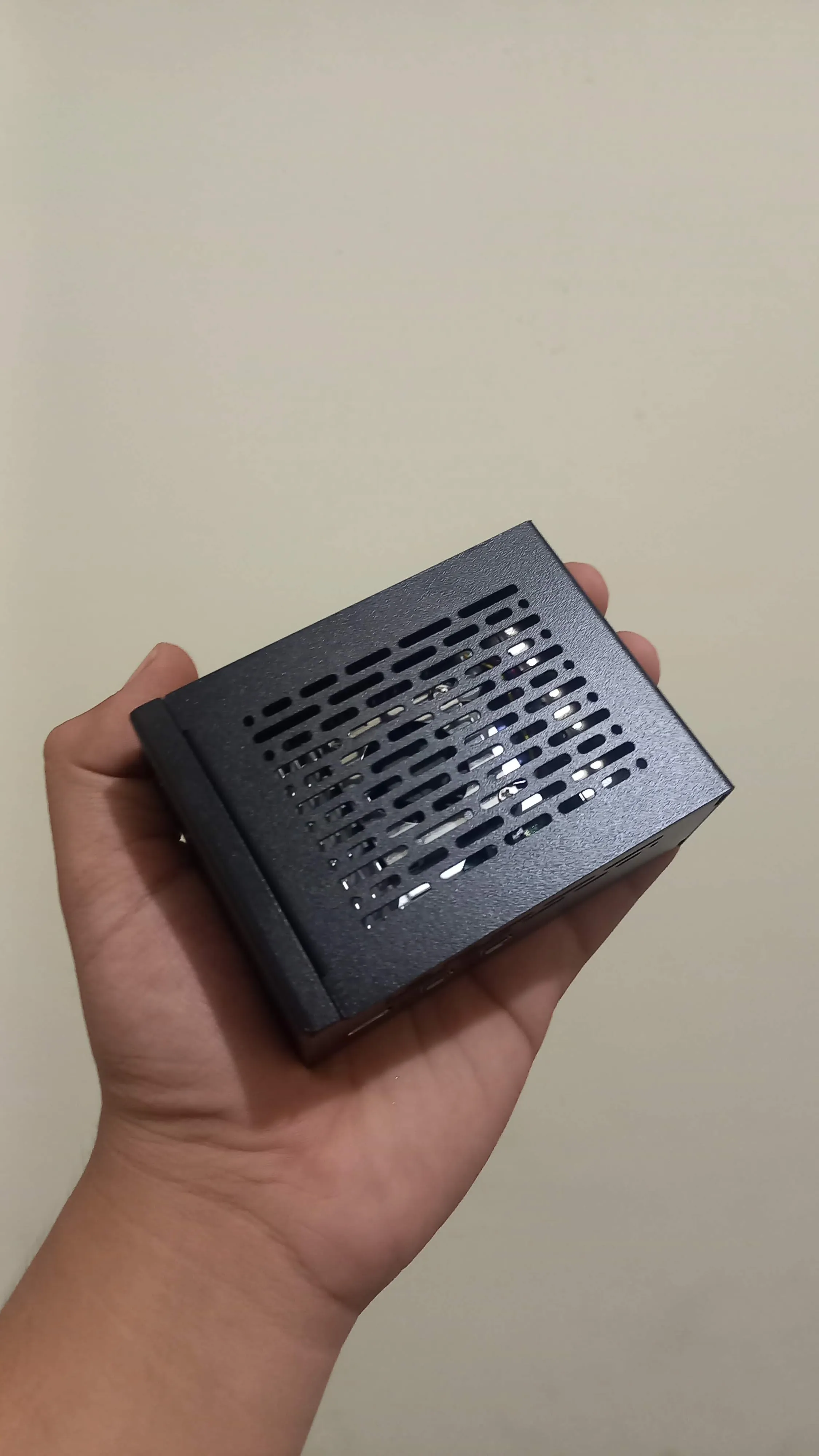
My “house” was a Raspberry Pi 5 with 4GB RAM, accessorized like a pampered chihuahua: a cooler, a heatsink, a sci-fi-sounding case, a 2TB NVMe SSD that could double as a skateboard ramp for ants, and a humble 32GB SD card—because even tiny homes need storage closets.
On paper, it looked like a project you’d tackle between making coffee and realizing you’re out of milk. Not exactly the bedrock of a digital empire.
But every decision was dictated by where I live: a compact apartment in Indonesia, where every square meter counts, every kilowatt-hour matters, and making too much noise is the fastest way to get exiled by your neighbours.
Whatever I built needed to be quieter than a ninja at naptime.
Miraculously, the Raspberry Pi fit the bill—like it was engineered by someone who lost a bet to an introvert.
With NVMe storage and a tiny fan, it ran quietly and politely—like a librarian who’s seen too much. Power draw stayed low. It existed in the background, doing its job without demanding attention.
I didn’t want performance. I wanted a server I could forget existed—like that one houseplant thriving on neglect and existential dread.
The House Rules (and How I Broke Them)
CasaOS made the Pi approachable, like a house plastered with sticky notes: Flip this switch for toast. This one for existential dread. I poked around, turned things off, and broke stuff gently—before breaking it properly, and then apologizing to no one in particular.
rclone was more like a grumpy handyman—honest, unsentimental, and not here to coddle you. Give it clear instructions, and it worked. Don’t, and it failed with the passive aggression of a toddler staring you down over a mound of broccoli.
cron was the silent pact: I’ll forget you exist, so you must never forget your chores. Like a Roomba for responsibility, quietly whirring through my to-do list at ungodly hours.
The house also picked up some habits.
First, Pi-hole: the digital equivalent of a polite bouncer, quietly escorting ads off the property. Not to make a statement—just to make the internet feel less like Times Square during New Year’s Eve.
Then, Tailscale.
I didn’t want to punch holes in my firewall just to reach my files. I wanted to drop in and out like a ghost. With Tailscale, the NAS appeared when I summoned it and vanished when I didn’t.
No dashboards. No drama. Just spooky reliability.
At this point, calling it “just a NAS” felt dishonest. This thing was a roommate—sharing my apartment, my power bill, and occasionally my existential anxieties.
Moving Day: The Digital Garage Sale
Migrating a terabyte from Google Drive to my NAS felt like moving out of a luxury hotel and discovering every closet was secretly a clown car.
Every folder was a mystery box: ancient code, accidental backups, and dependencies that survived out of sheer neglect and cheap rent.
The cloud is great at hiding clutter. Local storage, on the other hand, shines a flashlight into every dusty corner.
rclone didn’t judge; it just schlepped data. When a transfer paused, it didn’t offer a shoulder to cry on. It simply waited for me to realize that “100% complete” is more a state of mind than a number.
That’s when my tiny house started teaching me where the pipes, the rats’ nests, and probably a sentient dust bunny or two were hiding.
Even the Quiet House Has Ghosts
Once all my files had moved in, a chilling thought crept in:
“If this SSD croaks, I’ve just upgraded a mild inconvenience into a full-blown existential crisis.”
A NAS without backups isn’t independent. It’s wishful thinking dressed as a strategy.
So I rented a digital storage unit across town: Backblaze B2. I don’t visit. I don’t decorate. I just know it exists for the day things go spectacularly wrong.
The real change wasn’t technical. It was psychological.
The Raspberry Pi became my ground truth.
The cloud became insurance.
Turning Storage Into a Lifestyle (Sort Of)
Eventually, I realized the real problem wasn’t where my files lived.
Nobody ever forced me to decide what mattered.
So I changed the rules.
Google Drive is still in my life—but only as a workspace. I downsized from 2TB to a lean 200GB, which turned out to be more than enough for the active projects I need access to from both my office PC and my personal laptop.
Google Drive became my desk. Not my warehouse.
Finished projects go into a special folder called Archived, where they sit untouched for two weeks. No tweaking. No peeking. No “one last render, I promise.”
This cooling-off period filters out panic, regret, and 3 AM bursts of over-engineering. If I really need something, two weeks is enough time to realize it.
After that, the system takes over.
Letting Go—One 3 AM at a Time
Once a week, at the unholy hour of 3 AM, my Raspberry Pi springs into action like a caffeinated squirrel.
Using rclone, it moves—not copies—the archived project from Google Drive to the NVMe SSD. The cloud lets go.
That distinction matters.
Then automation pauses, and I step in.
I delete duplicate renders. I nuke unused versions. I Marie-Kondo caches and simulation data into oblivion. If it doesn’t spark joy—or at least relevance—it’s gone.
The rule is simple:
If I can make it again, it doesn’t belong in the archive.
An archive isn’t a “maybe pile.” It’s a museum. Only the final, greatest hits make the cut.
Once cleaned, the folder graduates to Archive_Clean—a name that feels less like a directory and more like a moral obligation.
Insurance, Not Convenience
From there, the Raspberry Pi performs its final ritual: uploading the pristine archive to Backblaze B2.
Quietly. Automatically. While I’m asleep.
This isn’t cloud-as-workspace anymore. This is cloud-as-fireproof-vault. I don’t browse it. I don’t edit from it. I just know that if disaster strikes—hardware failure, theft, or cosmic bad luck—my files are safe somewhere else.
Every piece has a role:
Google Drive is my workshop.
The NAS is my vault
Backblaze B2 is my off-site panic room.
Naming the roles made the system easier to trust—and harder to abuse.
It’s slower than doing nothing. It’s more work than dumping everything into the cloud and hoping for the best.
It’s also cheaper, more intentional, and far less stressful.
This House Won’t Make the Cover of Wired
A Raspberry Pi 5 won’t impress anyone at a hardware fashion show. It doesn’t scale. Forcing PCIe Gen 3 speeds out of it is like widening a garden path just to see if your cat walks faster.
But I know exactly what this little box is doing. I know how much power it draws. I know what happens when electricity blips. I know where my data physically lives.
And it does all of this quietly, inside a small apartment, without waking the neighbours or burning a hole in my wallet.
That’s not a limitation. That’s the feature.
What I Was Actually Chasing
This wasn’t a dramatic breakup with the cloud. I still use it. I probably always will. (It’s not you, Google. It’s me.)
This was about learning the difference between renting comfort and owning responsibility, about getting close enough to a system to understand why it works—not just that it works.
The Raspberry Pi didn’t hand me the keys to the kingdom, but it did let me stand on the porch and wave at my data—ready to yank the plug and toss everything into a backpack if things get weird(er).
They feel less like a subscription and more like actual stuff I own.
The Rabbit Hole (Now With Extra Tunnels)
I thought this adventure would end when the copy bar hit 100%.
Instead, it opened a new set of questions:
- How many backups are enough?
- Which files deserve paranoia?
- How much complexity am I willing to tolerate before I recreate the very mess I tried to escape?
The computer is tiny.
The rules are strict.
The mental gymnastics are limitless.
Sometimes, picking the quietest machine isn’t about humility.
It’s about clearing enough space in your digital life to hear yourself think—and maybe even enjoy it.